
How EAV Delivers Exceptional AV Services for Events in Las Vegas
Why is early AV planning important for events?
Early AV planning helps event organizers save time, reduce costs, prevent technical issues, and improve audience experience. By involving a professional audiovisual company during the planning stage, businesses can coordinate venue requirements, optimize equipment selection, streamline event production, and avoid costly last-minute changes. Early AV planning is especially important for conferences, trade shows, hybrid events, and corporate meetings.
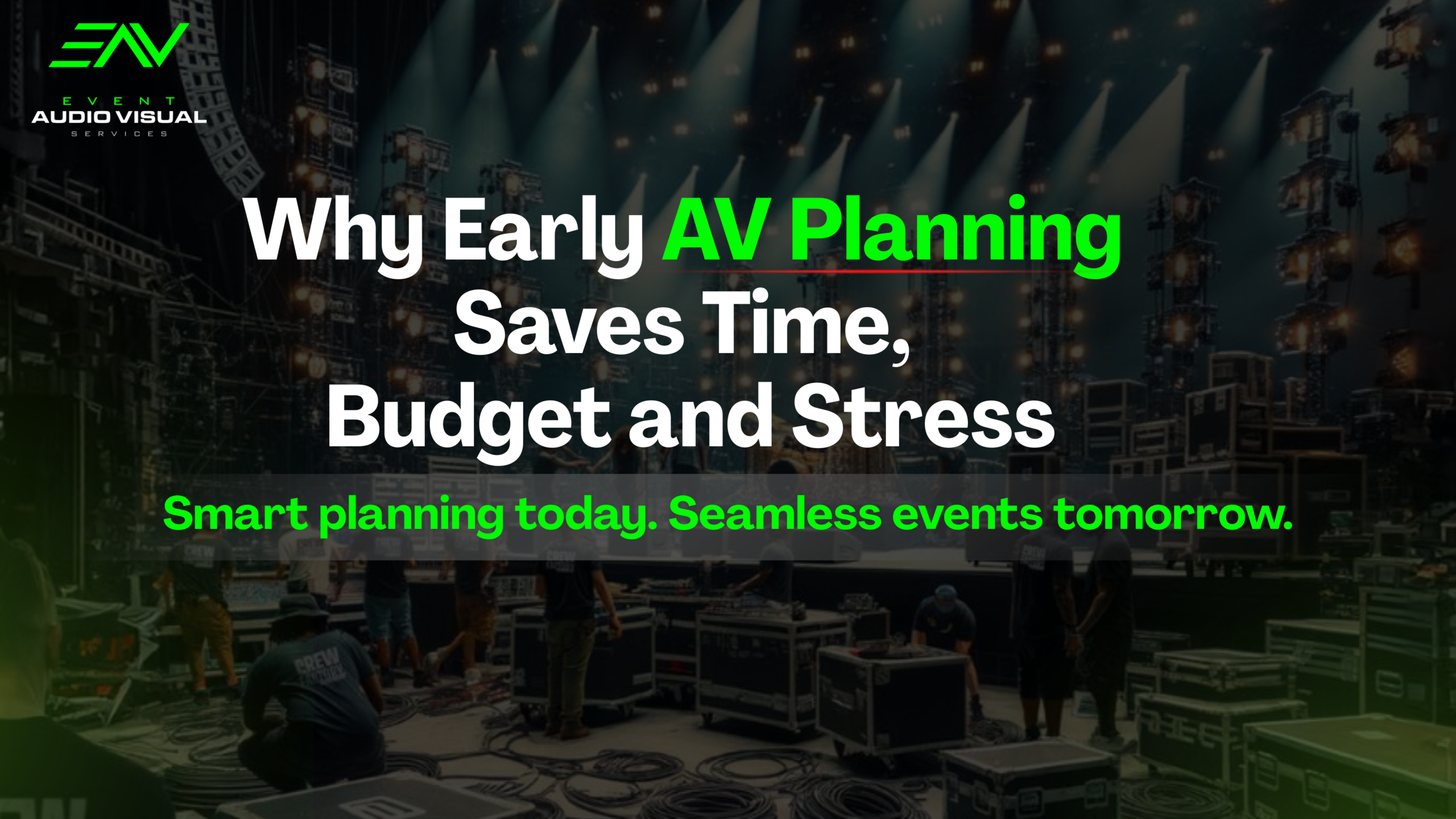
Why Early AV Planning Saves Time, Budget, and Stress
Start Smart for a Seamless Event Experience
Planning a successful event requires more than securing a venue and inviting attendees. Whether you’re organizing a corporate conference, trade show, product launch, hybrid meeting, or executive summit, audiovisual planning plays a critical role in the overall success of your event.
Many event planners make the mistake of treating AV services as a final checklist item. In reality, audiovisual production should be integrated into the event planning process from day one.
Early collaboration with a professional AV company allows organizers to build efficient production timelines, control budgets, eliminate technical surprises, and create a seamless experience for attendees.
What Is AV Planning?
AV planning is the process of designing, coordinating, and managing the audiovisual technology required for an event.
This includes:
- Audio systems
- Wireless microphones
- Stage lighting
- LED video walls
- Projection systems
- Live streaming technology
- Hybrid event platforms
- Event staging
- Technical staffing
- Video production
AV planning ensures all technology works together to support event goals and deliver a professional attendee experience.
Why Early AV Planning Matters
The earlier audiovisual professionals become involved, the more effectively they can align technology with your event objectives.
Benefits include:
✓ Better venue integration
✓ More equipment availability
✓ Lower rental costs
✓ Reduced technical risks
✓ Improved production quality
✓ Better attendee engagement
✓ Less stress for event organizers
For large corporate events, conferences, and trade shows, early AV planning is often the difference between a smooth event and a stressful one.
How Early AV Planning Saves Time
Event timelines become easier to manage when audiovisual planning starts early.
Professional AV teams can:
Assess Venue Requirements
Every venue has unique power, rigging, internet, and acoustical considerations.
Early site inspections help identify:
- Power distribution needs
- Ceiling rigging points
- Audio challenges
- Lighting limitations
- Internet requirements
Addressing these factors early prevents delays during installation.
Coordinate Production Logistics
AV teams can create detailed plans for:
- Equipment delivery
- Load-in schedules
- Setup timelines
- Rehearsals
- Presenter support
- Load-out operations
This keeps all vendors aligned and minimizes day-of-event complications.
Prevent Last-Minute Changes
Last-minute equipment additions often cause scheduling issues and increased costs.
Early planning allows time for:
- Equipment testing
- System design
- Technical rehearsals
- Backup planning
Resulting in smoother event execution.
How Early AV Planning Protects Your Event Budget
One of the biggest advantages of early AV planning is cost control.
Avoid Rush Fees
Last-minute AV requests frequently involve:
- Expedited shipping
- Emergency labor
- Equipment substitutions
- Additional technician hours
These expenses can quickly increase event costs.
Optimize Equipment Selection
An experienced AV provider helps match equipment to:
- Room dimensions
- Audience size
- Event objectives
- Viewing distances
This prevents over-renting or under-renting equipment.
Reduce Labor Costs
Well-planned events require fewer overtime hours because setup schedules are more efficient.
How Early AV Planning Reduces Stress
Event planners already manage multiple responsibilities.
Professional AV support removes uncertainty by providing:
Venue Walkthroughs
Technical teams evaluate:
- Stage placement
- Audience sightlines
- Audio coverage
- Lighting opportunities
Equipment Testing
Technicians verify:
- Signal flow
- Display performance
- Audio clarity
- Streaming reliability
Backup Systems
Contingency planning includes:
- Backup microphones
- Redundant internet connections
- Spare presentation equipment
- Secondary streaming solutions
This proactive approach significantly reduces event-day stress.
The Impact of Lighting and Sound on Event Success
Attendees remember experiences—not equipment.
Professional lighting and sound design directly influence:
Audience Engagement
High-quality sound ensures every attendee hears presentations clearly.
Brand Perception
Professional lighting enhances:
- Stage appearance
- Sponsor visibility
- Corporate branding
- Audience focus
Content Quality
Events recorded or streamed benefit from proper lighting and audio design.
Poor sound quality remains one of the top reasons attendees report dissatisfaction at conferences and meetings.
Why Hybrid Events Require Even Earlier AV Planning
Hybrid events involve significantly more technical complexity.
Successful hybrid productions require:
- Multi-camera setups
- Streaming platforms
- Audio-video synchronization
- Internet redundancy
- Remote attendee engagement tools
Early planning allows technical teams to test systems thoroughly before the event.
Without proper preparation, hybrid events face increased risks of:
- Streaming failures
- Audio delays
- Connectivity issues
- Poor viewer experiences
How to Choose the Right AV Partner
Selecting an AV company early provides a strategic advantage.
Look for providers offering:
Full-Service Event Production
Services should include:
- AV rental
- Lighting design
- LED video walls
- Live streaming
- Event staging
- Technical direction
Experienced Technicians
Choose teams with experience supporting:
- Corporate conferences
- Trade shows
- Product launches
- Executive meetings
- Hybrid events
Reliable Equipment Inventory
A strong inventory reduces dependence on third-party equipment providers and improves reliability.
AV Planning Checklist for Event Organizers
Before your next event, ensure you:
✔ Select an AV partner early
✔ Conduct a venue walkthrough
✔ Finalize room layouts
✔ Determine audience size
✔ Plan lighting requirements
✔ Schedule technical rehearsals
✔ Confirm internet bandwidth
✔ Test presentation systems
✔ Prepare backup equipment
✔ Develop a contingency plan
Following this checklist helps prevent many common event production challenges.
Professional AV Services in Atlanta and Las Vegas
Event Audio Visual Services provides comprehensive audiovisual solutions for:
- Corporate conferences
- Trade shows
- Executive meetings
- Product launches
- Hybrid events
- Live productions
Services include:
- Audio visual rental
- LED wall rental
- Stage lighting
- Sound systems
- Live streaming
- Event production management
- Technical support
Serving businesses throughout Atlanta and Las Vegas, the team helps organizations deliver professional, stress-free events through strategic AV planning and expert execution.
Frequently Asked Questions
When should I book AV services for an event?
For corporate events and conferences, AV services should ideally be booked 60 to 120 days before the event date. Large productions may require even earlier planning.
Does early AV planning save money?
Yes. Early planning helps avoid rush fees, reduces labor costs, improves equipment selection, and minimizes costly last-minute changes.
Why are site visits important for AV planning?
Site visits help identify venue limitations, power requirements, internet needs, and staging opportunities before event setup begins.
What types of events need professional AV services?
Corporate meetings, conferences, trade shows, product launches, hybrid events, virtual events, and large-scale live productions all benefit from professional AV planning.
What is included in AV event production services?
Services typically include audio systems, lighting, video displays, staging, live streaming, technical staffing, and event production management.
Related posts


